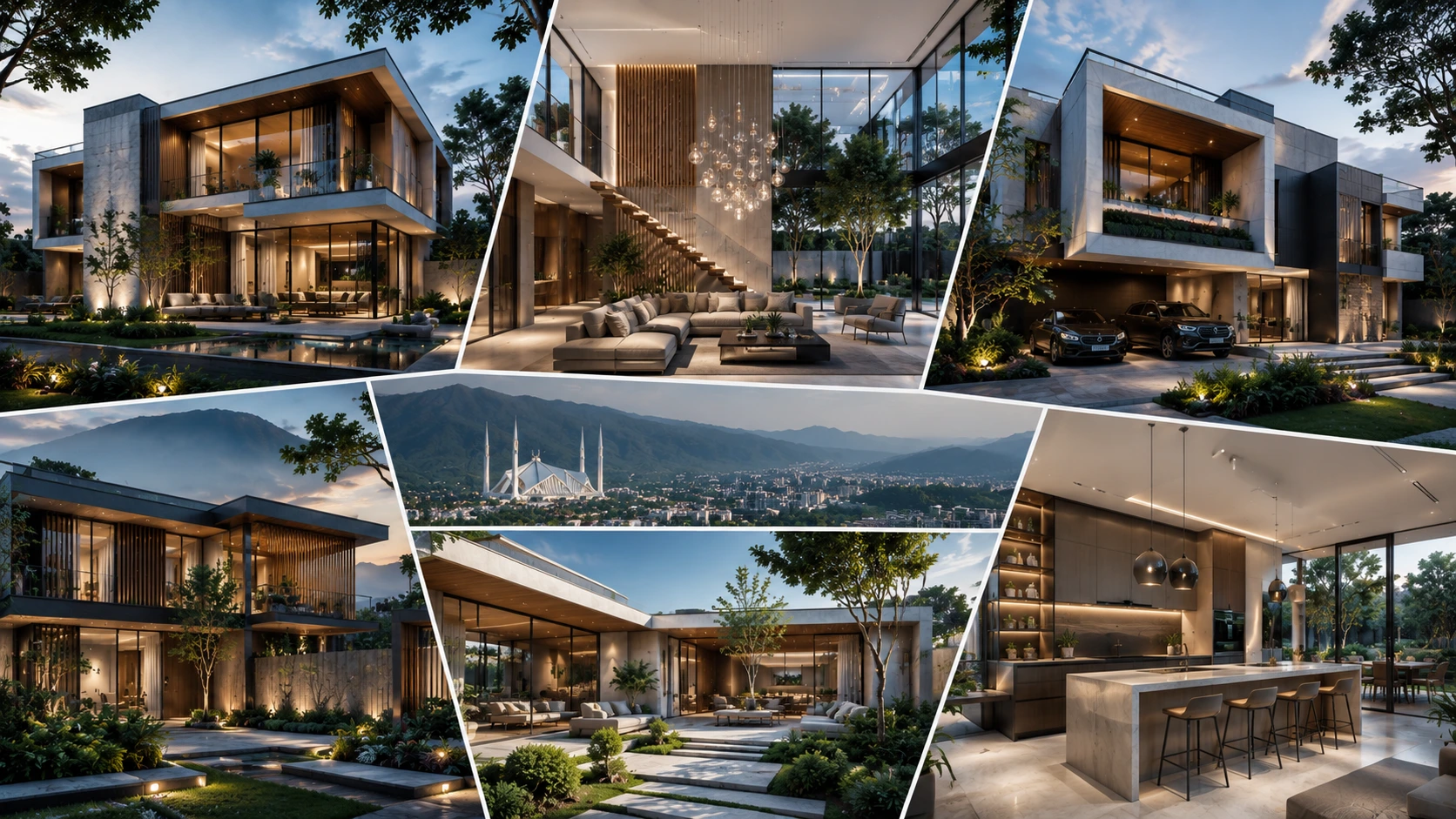
Islamabad, the capital of Pakistan, is a city known for its meticulous urban planning, lush greenery, and modern infrastructure. From its inception in the 1960s, the city has embraced a unique blend of contemporary design and natural landscapes. Over the years, Islamabad’s architectural identity has evolved, incorporating modern aesthetics, sustainable solutions, and cutting-edge construction techniques.
The Evolution of Islamabad’s Architecture
Islamabad’s master plan, originally designed by the Greek architect Constantinos Apostolou Doxiadis, emphasized wide boulevards, green belts, and zoning regulations to maintain a balance between nature and urban development. The early architectural landscape of Islamabad consisted of government buildings, embassies, and residential sectors that adhered to minimalistic yet functional designs.
As the city expanded, modern trends began to shape its skyline. High rise buildings, mixed use developments, and luxurious residences became more prevalent, reflecting Islamabad’s growth as a metropolitan hub. Contemporary architecture in Islamabad now integrates smart home technologies, energy-efficient designs, and open-plan living, creating a seamless blend of comfort and sophistication.
The Rise of the New Blue Area: A Modern Business Hub
One of the most significant developments in Islamabad’s architectural transformation is the establishment of the New Blue Area. Designed as a commercial and business hub, this development is reshaping the city’s skyline with towering skyscrapers, high-end office spaces, and state-of-the-art infrastructure.
Key features of the New Blue Area include:
High rise commercial buildings with modern glass facades and energy efficient systems.
Luxurious corporate spaces offering world class amenities for businesses.
Premium residential apartments integrated within commercial zones for urban professionals.
Green and sustainable designs incorporating rooftop gardens and smart energy solutions.
International standard shopping malls and entertainment centers.
The New Blue Area reflects Islamabad’s ambition to become a thriving economic and financial center, offering unparalleled business opportunities and urban convenience.
Redefining Modern Living in Islamabad
Islamabad stands at the forefront of architectural transformation. With a deep understanding of evolving design trends, the city has seen the rise of spaces that are both aesthetically pleasing and highly functional. These projects embody elegance, innovation, and sustainability, catering to the modern homeowner’s needs.
Key Features of Modern Architecture in Islamabad
1. Modern Residential Architecture
2. Sustainable and Energy-Efficient Designs
3. Innovative Commercial Spaces
4. Fusion of Traditional and Contemporary Styles
5. Smart Living Concepts
FastPaced Construction and Future Developments
Islamabad’s real estate sector is witnessing rapid growth with new housing societies, commercial zones, and urban developments. Some of the most notable upcoming projects include:
1. High End Residential Projects
Bahria Town, DHA, and Capital Smart City are transforming the real estate landscape by introducing futuristic residential communities equipped with smart home integration, scenic views, and world-class facilities. These developments offer a modern lifestyle with state-of-the-art security, sustainable infrastructure, and advanced amenities that cater to contemporary living standards. Additionally, the rise of high-end luxury apartments and penthouses with breathtaking views of the Margalla Hills is redefining urban living. These residences provide a perfect blend of comfort and elegance, offering residents an exclusive lifestyle with premium facilities, panoramic scenery, and cutting-edge architectural designs..
2. Expanding Infrastructure
To accommodate the rapidly growing urban traffic, several road expansion projects are underway, including the extension of the Islamabad Expressway. These developments aim to improve traffic flow and reduce congestion, ensuring a smoother commute for residents. Additionally, new metro and bus services are being introduced to enhance city connectivity, providing efficient and affordable public transportation options. The construction of bridges, underpasses, and the implementation of smart traffic systems further contribute to improving urban mobility, making daily travel more convenient and organized..
3. Commercial &MixedUse Developments
Islamabad’s skyline is set to transform with the development of upcoming skyscrapers featuring modern architectural designs, bringing the city closer to the aesthetic of global metropolises. These high-rise structures will not only enhance the urban landscape but also provide premium residential and commercial spaces. Alongside this, dedicated tech hubs and business districts are being established to support the rapidly growing IT sector, fostering innovation and entrepreneurship. Additionally, the expansion of five-star hotels, co-working spaces, and convention centers will cater to both tourism and business needs, making Islamabad a more attractive destination for investors, professionals, and visitors alike..
The Future of Islamabad’s Architecture
As Islamabad continues to grow, the demand for innovative, sustainable, and luxury driven designs is increasing. With a commitment to architectural brilliance and sustainable development, Islamabad is not just developing buildings; it is shaping lifestyles. Whether it’s a contemporary villa, a commercial hub, or a high end residential project, the city’s architectural contributions continue to define its future landscape.
With the rise of iconic projects like the New Blue Area, smart city initiatives, and rapid urbanization, Islamabad is well on its way to becoming one of the most advanced and aesthetically designed capitals in the world.